Thursday, 17 April 2014

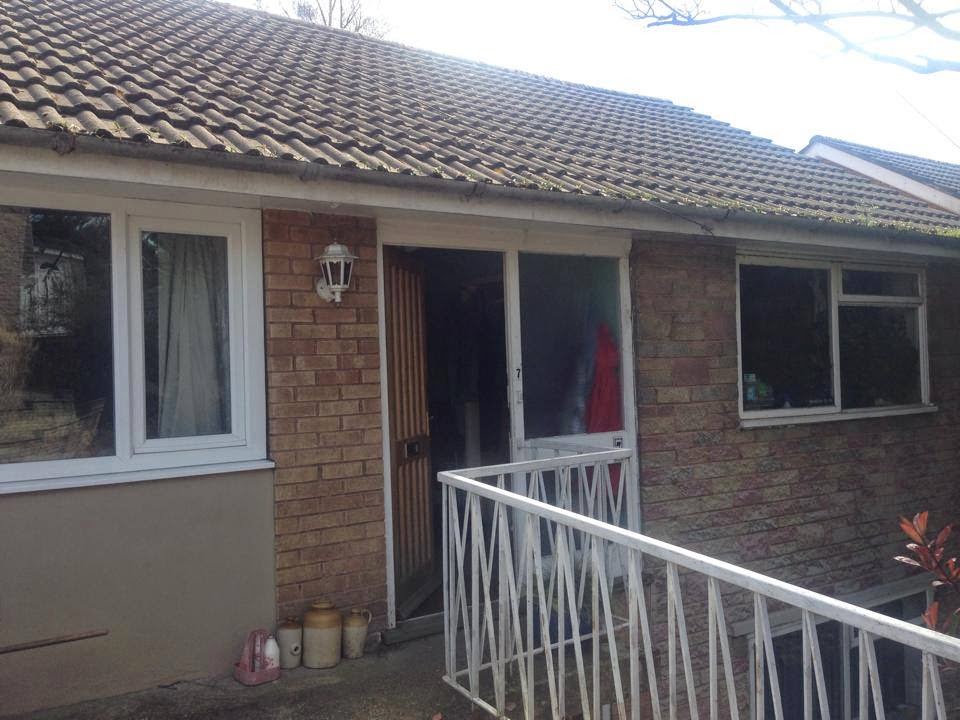
House in Sheffield - Location


Mike Figgis - Digital Film Making

I found Mike Figgis's book 'Digital Film-Making' an insightful text that helped me in preparing for the role of the director. I referred to the book throughout the production as it gave useful information that covered various aspects of film making, Mike Figgis often spoke about his experiences in both directing and cinematography also touching upon lighting, which was a something that I felt was a significant aspect to this film.

Mike Figgis shared my view in regard to lighting, or not lighting, he described the attitude toward lighting as being outdated due to the advancement in digital cameras and film stocks today being extremely light sensitive and capable of low light, in which I completely agree. Figgis (2007:67) states that “you’ve now got these amazing cameras that are incredibly light-tolerant — lightweight, beautiful pictoral quality, depth of field, the whole thing — but they continue to light as if it was 35mm”and humorously discussing it stating “Never use direct light — not unless the script says that someone’s being tortured with a bare bulb in their face” Figgis (2007:73). With this notion of films today being over lit I followed through with the concept of using completely natural light throughout the film, being partial to the use of a reflector. I came to this conclusion of shooting in available light for both the reason of aesthetics, and the scheduling of the film, I felt that we didn't have the time available to spend on lighting a scene because of a strict shooting calendar. I understand that my previous film had been heavily lit though we were shooting with a camera with very poor low light capabilities also I wanted the film to have a certain aesthetic which required navy lighting. I spoke to Tom Newsham the DP for this film about my idea of shooting without lamps, we discussed whether this would be practical and as we are both competent and familiar with the specification of the Sony F55 camera we quickly came to the conclusion that this would be easily achievable with what we had available. To further my understanding of this methodology I researched current films that had practised this approach to their cinematography and found that large productions such as Stanley Kubricks ‘Barry Lyndon’ which makes use of a very high speed f/0.7 Zeiss lens used by NASA and current films such as Terrence Malick’s ‘The Tree of LIFE’ displaying that choice of equipment allows freedom of using only natural light.

I made it clear to the actors that I wouldn't be scheduling rehearsals for the scenes prior to filming, I took this idea from both DP/30 'Youtube' interviews with directors and actors also from reading Mike Figgis's 'Digital Film-Making' text. I found an interesting chapter on working with actors, and as I'm very inexperienced director I referred to the book heavily for advice. Mike Figgis spoke about how he understands rehearsals and why he chooses not to do them, I admired this viewpoint and felt that the method of refusing rehearsals would benefit my actors performances. I felt that because I was working with high caliber actors this notion wouldn't be of concern on their part, I'd had previous experience working with my supporting actor Francesca De Sica and knew that she would be comfortable doing the scenes for the first time on set. Mike Figgis's reason for shooting spontainiously is as follows, Figgis (2007:105) “they’ll impersonate the rehearsal because they already did something interesting”. I found that this was sound advice drawing a parallel to this in my previous film 'Still In The Night' where I strived to replicate Francesca's casting call video line delivery, however this proved to be unsuccessful, her performance became unnatural and forced. As well as not doing rehearsals I decided to give very simple direction to avoid complicating the scene I aimed for natural movement allowing the actors freedom within their performance, I've found that from watching interviews with actors many mention shooting being over controlled and as an actor they feel wasted on the character they are playing. From time to time myself and the actors would diverge from the script using it as a basis from which they can expand, and as the film went on it has changed a lot since its original conception however as an indie film maker this is something I've come to expect, once on set camera angels change, locations change, and each person brings something to the film which more often than not results in something greater than originally imagined.


Thursday, 10 April 2014

Location Scouting - Peak District


Myself and Tom drove out to the Peak District to find a location in which to shoot the second scene where we will be introduced to Shawn the main protagonist and Jim the farmer, they will be seen shooting game and walking back to the car where Jim will drop eventually drop Shawn off outside his house. I liked the idea of Shawn living in the countryside the open landscape not only acts as a picturesque backdrop but a place where the viewer is not distracted by a populated area, the viewer can engage with Shawn observing his behaviour. 

I plan to have Shawn lying prone alongside Jim as he watches Jim take a shot at an animal the short sequence will help to illustrate Shawn's discomfort as Jim kills an animal. I feel that this along with the previous dream sequence where Shawn is running down an empty road in distress will hopefully inform the audience that he is a recently returned solider. 


Saturday, 15 March 2014

Uncles House (Location)

This is the kitchen / dining room where Shawn will make his phone call to his sister, I plan to shoot with Shawn at the table underneath the light both as a stylistic choice and so that he is lit. I chose to shoot in this house as it's belongs to a relative of mine making the negotiations easy in terms of filming permissions and availability. The house has a farm house aesthetic that I was after, rustic with plenty of character to contribute to with art direction.  
The bathroom is very small which could prove hard to film in, I would like to avoid using a wide lens in this scene and throughout the film as the wider lenses provided in the Sony F5 kit suffer from barrel distortion. Myself and Tom will arrange the scene and work with lens will be suitable to capture what I want. I would very much like to capture as much of Shawn's naked body as possible, I will speak to the actor about full nudity and how far he is prepared to go in this scene, I would like to display his tattoos that I plan to get Luke to put on in make up, as simple as this shot is it has immense importance to the film and in displaying Shawn's disposition.

Possibly shoot into the mirror as Shawn is taking a shower, to get around the small room problem though I would prefer to get in closer to the actor at a more intimate distance.


This room will be Shawn's in the film I like how the light is cast through the window on the bed, there will be a shot of Shawn sitting on the bed looking toward the window possibly holding something of his fathers the room will be dressed with Shawn's military baggage and uniform in clear view for the audience.


Tuesday, 11 March 2014

Casting - Mark Holgate

Mark Holgate

I was put in touch with Mark Holgate by Francesca, she forwarded me his contact details during a conversation about the film, she had recently worked with Mark and recommended I speak to his regarding the role in my film, she mentioned that he had been cast as a soldier before. This could help with preparing him for this role.

Mark had done mainly theatre work however I feel that the way Francesca spoke about him I trust that he will be suited fully capable of taking on the role in this film. I gave Mark the script and following a Skype conversation he produced me three casting videos of the dialogue that he would be performing later in the film, i was really impressed by what he sent me and set about sorting his schedule right away.


UPDATE

During the filming myself and Mark worked very closely to achieve the right state of mind for the character Shawn, we spoke on Skype prior to filming to get a general sense of what I was after and if he had any questions about the role. During the setting up of the scene I'd spend a brief moment with Mark and go through what I wanted, however I'd always welcome Mark's input keeping in mind the pace of the film and how the characters mood would develop from scene to scene. I often explained to Mark that I wasn't going to pursue the PTSD of the character however a general sense of the soldiers trauma since returning home from fighting would need to be expressed throughout the film. Mark had little difficulty understanding and portraying the character Shawn which made the directing process simple, I preferred to give little direction to the actors to generate a more natural performance, I took advice from Mike Figgis's book to prepare me for directing which I found extremely useful. I decided not to do any rehearsals for the film and the actors were all compliant with this idea, I've found that many directors don't do them for varying reasons, but for me I believed that they would get a good rehearsal and aim to achieve that rather than what comes naturally on set, I thought it would be exciting to see what would happen on the first take having the camera rolling and I was confident that with the calibre of the actors I had this wouldn't cause any problems. If I found that a take didn't work I would take a minute with the actors to discuss what we needed to do, in the minimal struggles we had, I'd draw on the actors experience to resolve the issue.


Thursday, 6 March 2014

Light Metering


Today I researched how to use a light meter, again this type of research is part of the cinematographers however like getting to know the Sony F5 I feel that having this knowledge is beneficial to the production of the film. This technical knowledge will also help me in my other module 'professional practise' where I will be investigating the role of a feature fiction film DOP, I know that being able light meter accurately and efficiently is imperative to that of the DOP. Using a light meter has been something I have been interested and after watching this short video I feel comfortable putting this new technical knowledge into practise in this years film. I understand that there will be a minimal crew on set during the production of this film and if I am able to assist Tom (the DOP) this will only provide a better working environment so that we aren't wasting precious time setting up shots when we need to be shooting. Though having said this my main focus on set will be to direct the actors to get their best performance, making sure they're expressing their character accurately.

Blue Valentine (2010)


This film has been inspiration both in terms of its cinematography and narative themes. The film centres around the life of a couple cutting between two time zones, the current where wee follow their deteriating relationship and the past where we witness them meeting and falling in love. My interests dont often lie with films that utilise a on linear structure however I enjoyed the simple cutting between the two temporal spaces, this sturcture didn't create a confusion or pose an akward complex structure to figure out it was simple leaps between time that slowly released information about these characters, how they were previously when they first met and how they remain in the current temporal frame of time. This theme of relationships is going to resinate through my film, as I'm interested to see how they can change when altering factors are employed, in my case war, an unstable upbringing with a distant father. Blue Valentine shows a leap of 15 years within that time their has been a huge change in Ryan's and Michelle William's relationship for the worse. In the first chapter of my film I would like to depict the most stable period of time in Shawn's life as a montage of nostalgia shot on a Super 8 film camera, halcyon that the characters long for.


 I intend to use a symbolic shot to cut from when the film leaps 10 years to end the chapter of the families life. In Blue Valentine there is no specific genre or period in time, the film simply shows a very real human relationship, the dialogue flows naturally, the actions and situations feel real and raw, To capture these scenes, unbroken long takes are used we see an extenive take rather than a cut together performance that has been made in the edit room, the film is essentially made on set. At times the cinematography feels cramped and there is no use of wide shots or panaramics that capture the city, instead we see a strong focus on the family, the camera work is natural most likely on a shoulder rig so the camera man can get close and intimate with the characters a well considered approach to this size film.


The first instant in which the film cuts from one temporal space to another is near the beginning after we've been introduced to the family, Ryan leans against a car as he watches his daughter leave to stay at her grandparents.


I tend not to look to much into the shot composition and what that might be reflecting when discussing films however I see that the two shots that constitute the temporal change when placed together suggest the character is looking at himself as they are both in similar positions facing toward one another, though conflicting states of mind.

The next point in which the film leaps in time is during the scene where Ryan initially meets Michelle Williams, the cut is re visited later in the film and serves as the most inventive of the temporal interchanges. From the shot pictured below the film then reverts back to present day


This cut seems to follow a similar convention to the previously mentioned of which it suggests the character is looking back at themselves or their family, and alternatively, looking toward the future, both with contrasting expressions. The time has seen a change in their relationship, young love juxtaposed against a weathered mother, somber with the expression of a predicament. The reverse shot that follows this is of Ryan Gosling conveying the way she views him in the current state of the relationship as opposed to when she first met him. This attention to the editing displays the directors and editors intent of how they want the story to be told, there is consideration in the leap in time, though it happens without warning or additional sound, the pause and moment in the scene is enough for the viewer to appreciate the reasoning behind the temporal shift. This notion behind the pace of the editing and where it takes the narrative is evident of Christopher Nolan's explanation of how films progress through their story, withholding information releasing it slowly. Nolan defines narrative as "the controlled release of information", this idea of controlling what the audience can witness is clearly evident in 'Blue Valentine'.
The Place Beyond The Pines (2012)

I've taken inspiration from this film in all respects but mainly the narrative structure. Derek Cianfrance's fondness of relationships and legacy are routed in this film much like his previous film Blue Valentine. I liked the idea of seeing how one persons actions and life can effect the next generation, we see the repercussions of Ryan Gosling's character Luke Glanton when the film leaps 15 years down the line and we are presented with the life of his son and witness his mothers struggle with him, we see how she is still grieving from the death of Luke.

I watched an interview with Derek Cianfrance about his films where he mentions A Place Beyond The Pines in great detail, he often talked about his direction during the film and how he prepared actors for the roles they were undertaking. There is one scene where Ryan Gosling tries to stop Eva Mendez's character Romina from driving away as she leaves work, this is following Ryan's vicious attack on Romina's husband Cofee. Derek talks about how he did serval takes with simple direction each time just asking Ryan to stop he from leaving by all means and no description on how to do that. He explains how on one occasion Ryan placed his head underneath the car wheel as Romina was about to drive off, though this take wasn't used in the film i understand how the simple direction allows the actor to complete an action thats fresh and natural, meaning that the actors performance isn't forced giving them the space for their creativity and what they feel the character would do in that situation. I plan to take this idea and apply it to my film when directing the actors to achieve the performances I want during each scene.


I feel that this extreme action of placing his head under the wheel of the car reflects another of the directors techniques where he asks each actor in the casting to surprise him during the film. This responsibility that Derek is giving the actors allows them to make the character their own, the director is open to their suggestions to achieve something more exciting bringing the characters off the paper. This less structured approach to the films creation is something I aim to consider throughout the filming of my film. I understand that sometimes things don't always work the way they were written once the actors are on set and so to tackle any issues of the script or scene not working i want to work as a team to resolve any issues that the scene may be causing. Keeping in mind "What is the scenes purpose and what does it need to achieve?".


Out of the Furnace (2013)

After watching a DP/30 youtube interview with Christian Bale I found that he spoke about making films from an actors point of view and what film set he finds most ideal to perform within. He went on to explain that he found acting within a false or green screened environment difficult to portray a character as his surroundings didn't exist, he spoke about acting within an actual location where you can turn the camera around and the backdrop is all real being a far better scape for his performance much like a documentary, giving him something to act to, encompassed in the bounds of the environment. This statement became is easily understood in his most recent film 'Out Of The Furnace' where he plays a brother to a recently returned soldier whose leading a reckless life waging himself in illegal bare knuckle fights. 

This idea of a 360 degree stage in which to perform can be seen in the film where Christian Bale playing Russell is released from jail following his man slaughter sentence. The scene begins with a profile shot of Russell looking out of the prison gates between two guards, the shot continues from here down to when he runs and hugs his brother, looking back to the prison doors, he then walks around the car before his brother Rodney offers him the chance to drive.

The scene is captured in a long take from a medium CU, this method of using a long take with framing that isn't too close allows Christian Bale to move around the frame without being over constrained to his positioning, creating a more natural performance. The camera man learns his movement and finds the best possible position in which to frame him, this seems unconventional as generic shooting usually frames the subject and applies taped lines to ease the focus pulling and increase the control over the scene. This idea of allowing the subject the latitude to act within a larger space relates to the notion of rejecting rehearsals and shooting spontaneously, this is a technique I will be utilising when directing my actors, I trust that their calibre and confidence will be displayed without any concern of the performance being impaired. 


Once the shot cuts from a spontaneously shot scene like this the director can see which part of the performance he likes and/or take pieces in or out to use in the next take, I understand that simple direction in addition to this method will create fresh performances giving the director the choice of what he thinks will work best, the takes become more diverse which will prove to be beneficial at the editing stage.


Wednesday, 5 March 2014

Test footage from the Sony F5

Today I went out filming with the Sony F5 round Sheffield, I've been getting the camera out each week so that I'm completely competent with using it, like I've mentioned previously I feel that having knowledge of the camera despite having Tom as the DOP I know that having the ability to use the camera as well as Tom will only create a more efficient working environment if we both know how to use the camera.


Wednesday, 26 February 2014

The Place Beyond The Pines - Scene


In this scene from A Place Beyond The Pines we see Luke Glanton played by Ryan Gosling and another character Robin played by Ben Mendelsohn ride through a forest. At first the riders are unaware of each other, we follow Luke's bike from behind frantically until there is a shift of perspective to Robin's point of view as he scouts out Luke from a far, Luke then makes the same realisation that their is another rider, among him in the forest. Both keep riding occasionally glancing to look at one another, at this point the diegetic sound begins to drown out and a music track is introduced Derek talks about this suggesting that the riders are sharing a subconscious state, they make a connection without speaking. Both share qualities that become more apparent later in the film but from this brief moment its clear they both share a similar look, Derek mentions them being "cut from the same cloth", both have a fondness for motorbikes, outlaws that use their skills to get by. I plan to use a moment like this in my film where there is a subtraction of dialogue from the scene be it a connection between two characters or a character going into his own subconscious state, this will be done with the use of a tonal shift orally and possibly the use of slow motion to suggest a retraction from real time to enter another temporal space. I have the idea that these moments could be when Shawn see's his mother in the state of dementia for the first time so express his grief or the aftermath of the violence when Shawn has struck out at his sisters boyfriend to illustrate his anger and state of disorientation from what he's experienced in recent events. I feel that an extreme CU shot of Shawn's mothers eye would be an iconic shot in which to depart from to end the scene from this we would then leap 10 years into the final scene of the film. Another point in my film in which this subconscious state could be visited would be the shot of Shawn taking a shower as he ponders about contacting his sister. Shower scenes are infamous in films and I feel that a lot depict the character in a moment of reflection, the water of the shower raining down on the skin seems somewhat symbolic. The showers scene in my film could provide as previously mentioned a time of self reflection which could even permit a flash back as a tool not only to illustrate the characters cognition but a way to insight his decision to go and see his sister, informing the audience of the narratives change in trajectory.

Here is an example of a CU eye shot in slow motion, this shot would be of Shawn's mothers eye as she sits there peacefully as the violence ensues between Shawn, his sister Ellie and Ellie's boyfriend.


Tuesday, 25 February 2014

Location (Shooting Range/ Peak District)

Today I went to the hunting shop on Eccleshall Road to see if I could purchase a cheap air rifle as a prop for the film. The shop owner showed me various rifles at different price ranges but I still felt that the cheapest rifle at £40 was too much to spend on one single prop, I also felt that it didn't look authentic enough for the film. However I was in luck as customer over heard that I was shooting a film, he introduced himself as Jamie, I described what the film was about and he then explained that he owned substantial land in the Peak District and that we could film there. He also mentioned that we could borrow his guns as props for the film saving us money, the weapons he owned were also much more what I was after including shotguns and old fashioned air rifles. He gave me his number so that we could keep in contact as go on a recce at his farm.

Friday, 21 February 2014

Casting - Liam Loughrey

Liam Loughrey - Shawn


Liam is being considered for the part to take the leading role playing 'Shawn”. Luke Wren the art director for the project knows Liam from back home and suggested I take a look at his show reel and CV. Looking through Liam's work I've noticed he's played a solider in a couple productions, I don’t feel that this makes him any more suitable for the role as I feel that the soldier in my film is at a much different mental state and the previous experience playing a soldier wouldn’t aid Liam in preparation for the role a huge amount, however his athletic physique would fit the character, less important but still a consideration I will be making throughout the casting. Liam's physical appearance to me seems slightly old fashioned and I do like that, in one of his photos he has curly hair and a stubble, an under kept look that is a reflection of his character, in terms of art direction and character appearance this is something I would like to explore.


I am yet to speak with Liam about this role but this will be the next step, I will allow George the producer to contact him and discuss dates etc, and I will send him a copy of the script and a detailed character breakdown so that he can send me a video cast of him reading out some of the lines from the script, a sound clip may help but a face to face meeting would need to be arranged to make an informed decision. 


Liam has experience in stage combat which may be useful when acting the violent scene between him and his sister. I will be in contact with Liam asap and will be considering him on the strength of his casting video, meeting and availability.


Casting - Francesca De Sica

Francesca De Sica - Ellie


Francesca gave such a strong performance in the previous film that I felt she should be considered in the major project. She will be playing a very similar role which gives her a head start in the character building process. Her age, image, and vocal tone fit that of the character 'Ellie', Francesca showed a enthusiasm and commitment to the demanding role in our previous film which will be required again in this major piece. Her trust in the crew and myself as a director allowed me to push her performance and I aim to do that same in this film. Francesca is comfortable with very emotional scenes which is the main reason I wanted to cast her again, she can produce an extremely convincing break down as demonstrated in the first scene of “Still in the Night” where she leaves an upsetting answer phone message.


Another quality that Francesca posses is her people skills, she quickly got on with David Worden our supporting actor from “Still in the Night” despite meeting him moments before shooting the explicit sex scene and I hope that she can achieve this creative dynamic again with the actor that she will be supporting this time round. She is comfortable with directional changes and adaptions on set quickly understanding what I wanted to achieve, responding with her ideas to flesh out the rendition.


I feel that Francesca's voice has the ability to fathom an instant response or influence the audience simply from her vocal tone, she has a resonance that feels familiar and filmic. I'm hopeful that Francesca's voice can compliment the lead actor to build an interesting dialogue sequence. I understand that dialogue is like a symphony and that bringing in the correct pitches and tones can fabricate an accomplished complete sound, I aim to find this arrangement so that the soundscape is an accurate reflection of her disposition.


Francesca was comfortable with violence and even gave interesting input into her previous role in which I welcomed, her feedback allowed me to produce a convincing scene with her insight and experience, this is something I will imminently come to grips with in the argument scene which will take place in the later scene of this script. I'm looking forward to working with her on a more developed character, we both have more freedom and time to investigate a character that has an interesting relationship occupied by intense emotions and questions.


Thursday, 20 February 2014

Land Rover

I managed to borrow a Land Rover off a friend from back home, this car would serve as Jim's vehicle in the film. The car is currently under maintenance however I'm assured it will be ready and running in time for the shoot. Their is a rear window in the car that we can potentially shoot through if need be but shooting from the passenger side would also work. The car has three seats and so I plan to not only use the car as a prop but a transport vehicle for the crew and equipment. I feel that the bright yellow is slightly iconic to look at I feel it adds character to the film rather than being intrusive. With my insurance policy I can drive the car though we will sort out the necessary requirements for the actor prior to filming. I spoke to Luke Wren the art director about the car and he mentioned dressing the interior to suit the character of Jim, he talked about hanging rosary beads from the mirror suggesting that Jim is a religious character, I would lim to get a close up shot of these beads hanging from the mirror to maybe open the car scene, a motif that relates to the biblical theme of the film. 

The car may be useful when filming the dream sequence that opens the film, I plan to get a shot looking back at Shawn as he runs toward the camera down the road, shooting out the back of the Land Rover could work to achieve this, if the road is smooth enough.  


Manchester bar

Peak District


The image above feature the type of roads I would like Jim and Shawn to drive through during the car scene, a field pictured above would also work where the car will be parked before they drive off. 


I plan to shoot in the Peak District for part of the film, the Peaks will be where Shawn and neighbour Jim will reside out in the open plains. I feel that this location would suit the aesthetic of the film, a contrast with the later scenes in the bar in Manchester, this contrast serves as both a stylistic choice and to express the distance between Shawn and his sister. For the opening shot that features Shawn running down a road toward the camera, I would like to shoot on the road that runs through Winnats Pass near Castleton, I picked up a Peak District magazine from a tourist information shop in Sheffield, Winnats Pass was on the cover, I thought it looked rather iconic and there seemed to be no road markings I liked this because it made the road seem even more rural and nondescript, important to the dream sequence as people wouldn't be able to decipher his location. I'm checking the weather conditions regularly and hoping that there will be mist or fog on the day we shoot, the fog is something I wrote into the poem that will open the film but I also experienced it whilst driving home through the Peaks recently and thought it would add character to the mood of the scene, almost surreal looking. 

Once the F5 camera is bookable myself and Tom will go out and find these locations and mark them on a map for reference when we come to film, we aim to capture the wide shots of the fields and hills before we start our week of shooting with actors. These shots will be used in the film but Ste the sound designer asked myself for some opening shots so he could layer some sounds to build an idea of what it may sound.